Last Updated on June 4, 2026 by Prabhakar A
As land becomes increasingly scarce and more water surfaces become available for development, the floating PV system has emerged as one of the fastest-growing segments in the solar industry.
According to Market Growth Reports, the global floating solar panels market is estimated at USD 290.62 million in 2026 and is expected to reach USD 1664.88 million by 2035, growing at a CAGR of 21.4%.
However, with more suppliers entering the market, the real challenge is knowing how to separate a reliable solution from one that only looks good on paper. This article will guide you through the key factors to evaluate when choosing a floating PV system supplier.
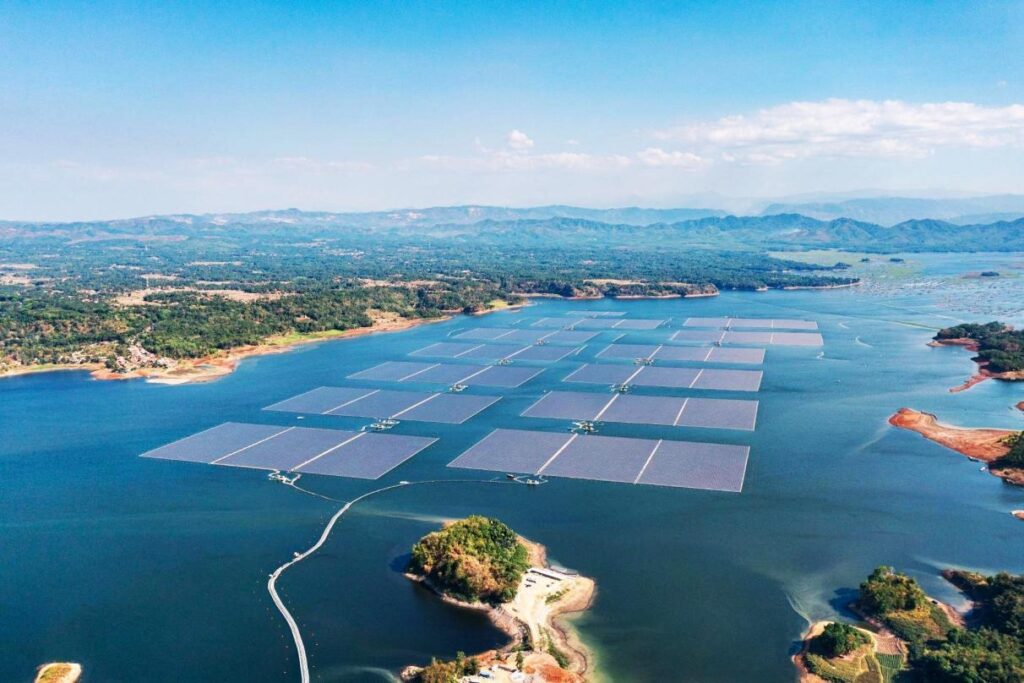
Table of Contents
Safety: The Priority of Every Floating Solar PV System
When a solar installation sits on water, the stakes for safety are considerably higher than those of a ground-mounted system. A well-designed floating solar PV system must account for structural integrity under wind loads, wave action, and fluctuating water levels.
Look for products that have undergone independent third-party certification (TÜV, DNV, or similar bodies) and that can demonstrate validated test results, not just claims.
Electrical safety is equally important: proper insulation, grounding standards, and watertight connections protect both the system and the surrounding water environment.
Buoyancy: The Foundation Every Floating PV System Is Built On
No factor is more fundamental to a floating solar PV system than its ability to stay reliably afloat. Buoyancy performance depends on material quality, module weight distribution, and how the platform responds to changing load conditions, including the addition of maintenance personnel on-site.
Ask your PV supplier for detailed buoyancy calculations and load-bearing test data. A system that underperforms on buoyancy creates cascading risks that no amount of software monitoring can fix.
Durability: The Determinant of a System’s Long Lifespan
Water environments are demanding. UV radiation, humidity, salinity, and temperature swings all accelerate material degradation. High-quality floating PV systems use food-grade, UV-resistant, and anti-corrosion materials to ensure structural integrity over a project’s 25-year operational lifetime.
When evaluating a PV supplier, ask specifically what materials are used in the floats, connectors, and fasteners, and what warranty coverage applies to each component.
Modularity: The Key to Scalable, Flexible Deployment
A modular floating solar PV system offers decisive advantages in real-world project execution. Standardized components reduce the complexity of logistics, shorten installation timelines, and make future expansion far more manageable. The best systems allow configuration across different water body shapes and sizes without requiring fully custom engineering each time.
Fewer component types also mean fewer spare parts to manage, lower maintenance costs, and simplified staff training — all of which contribute to long-term operational efficiency.
Efficiency: The Gains That Go Beyond the Panel
The cooling effect of water on floating PV panels can lead to an energy gain of between 5% and 15% compared to land-based systems. However, system-level efficiency also depends on structural layout, tilt angle optimization, and how well the platform minimizes shading between adjacent rows.
Opt for a floating solar PV system whose layout has been engineered for maximum capacity per unit of water surface area, not just one that accommodates the largest number of panels on paper.
Compliance: The Requirement That Can Make or Break a Project
A floating PV system that works well technically but fails to meet regulatory requirements can result in costly delays or project shutdowns. Compliance covers environmental standards (such as the use of materials safe for aquatic ecosystems) as well as structural, electrical, and grid connection requirements that vary by country and region.
A credible PV supplier should have a documented track record of obtaining necessary certifications and navigating permitting processes across multiple markets.
Track Record: The Proof Behind Every PV Supplier’s Promise
Any PV supplier can publish a well-designed brochure. What actually distinguishes a reliable partner is a portfolio of delivered projects — at scale, across diverse environments, and over a sustained period.
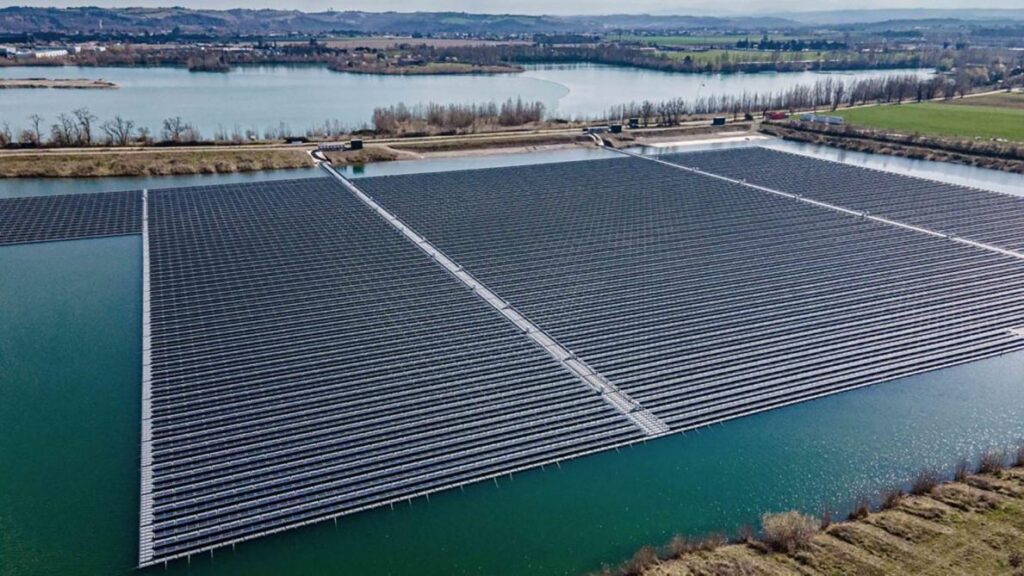
Look for case studies that match your project’s conditions: water depth, climate, capacity range, and application type (reservoir, subsidence area, coastal, etc.). References from completed large-scale installations give you far more confidence than any product specification alone.
Why Sungrow Is a Trusted Floating PV Supplier
When it comes to ticking every one of these boxes, Sungrow stands out as a proven leader in the global floating PV market. Sungrow’s floating PV offering spans a complete system solution, from the floating body to the inverter and booster floating platforms.
Sungrow FPV’s core products have been accredited by TÜV, DNV, WARS, CGC, and other international authorities.
Its SGF-TS30M exemplifies what a modern floating solar PV system should deliver.
- The SGF-TS30M carries TÜV certification confirming its ability to withstand snow loads of 2.3 kN/m² and assures a 25-year operational life.
- It supports PV modules up to 2,465 mm in length and 1,303 mm in width, with tilt angle adjustability from 5° to 15°, and features a 0.58-metre-wide maintenance walkway for safer access and easier maintenance.
- Its modular design with pre-assembled components reduces installation time by up to 30% and simplifies the build process to just six standardized steps.
On the project side, Sungrow’s credentials speak for themselves. Its portfolio includes a 192 MW installation on a reservoir in Indonesia, a 200 MW plant on a former coal-mining subsidence area in China’s Anhui Province, and the Philippines’ first megawatt-scale floating solar project. With over 4 GW of floating PV deployed globally, Sungrow holds the No. 1 position in global market share for floating solar.
Ready to Start Your Floating Solar Project?
Choosing the right floating PV system means evaluating safety, buoyancy, durability, modularity, efficiency, compliance, and track record all at once. Sungrow brings proven technology, certified products, and large-scale project experience to every one of these areas.
Visit sungrowpower.com to explore Sungrow’s floating solar solutions or get in touch with the team directly to discuss your project requirements.
Comments
0 comments