Last Updated on March 27, 2026 by Prabhakar A
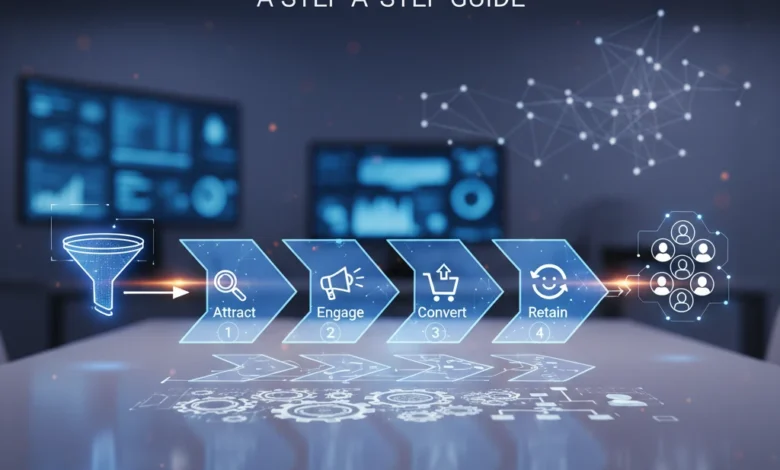
Are you feeling overwhelmed by the sheer volume of marketing tasks on your plate? Do you wish there was a way to streamline your efforts and achieve better results with less manual work? You’re not alone. In today’s competitive digital landscape, marketing automation is no longer a luxury—it’s a necessity. This guide will equip you with a step-by-step approach to implement effective marketing automation strategies.
From defining your objectives to mapping the customer journey, we’ll break down the process into actionable steps. By mastering these techniques, you can free up valuable time, improve your ROI, and enhance customer engagement.
Table of Contents
Tired of Manual Marketing? Discover the Power of Automation (Updated for 2026)
The Evolving Landscape of Marketing Automation in 2026
Marketing automation continues to evolve rapidly. In 2026, we’re seeing increased integration of AI-powered marketing tools, hyper-personalization, and a greater focus on data privacy. Simple rule-based systems are giving way to more sophisticated platforms that can predict customer behavior and adapt messaging in real-time. Think beyond basic email sequences – consider interactive content, dynamic website experiences, and personalized product recommendations.
Why Manual Marketing is Becoming Obsolete
Manual marketing efforts, while still valuable in some niche scenarios, are increasingly inefficient for scaling growth. The sheer volume of data and touchpoints in today’s digital world makes it virtually impossible to manage effectively without automation. Imagine manually segmenting your email list, personalizing each message, and tracking engagement across multiple channels – it’s simply not scalable. Furthermore, manual processes are prone to human error and inconsistencies, leading to missed opportunities and a fragmented customer experience. While effective networking can still be a valuable tool, it cannot be a replacement for scalable digital automation.
What Exactly is Digital Marketing Automation and Why Should You Care?

Defining Marketing Automation: Beyond Just Email
Digital marketing automation goes far beyond simple email autoresponders. It encompasses the use of software and technology to automate repetitive marketing tasks, personalize customer experiences, and streamline workflows across various channels. This includes social media marketing, content marketing, lead generation, customer relationship management (CRM), and more. The key is to create automated processes that deliver the right message to the right person at the right time, based on their behavior and preferences.
Key Benefits: Increased Efficiency, ROI, and Customer Engagement
The benefits of marketing automation are significant. Increased efficiency allows your marketing team to focus on strategic initiatives rather than repetitive tasks. Improved ROI stems from better targeting, personalization, and lead nurturing. Enhanced customer engagement results from more relevant and timely interactions. Imagine automating your lead qualification process, sending targeted content based on website behavior, and providing personalized onboarding experiences. This leads to higher conversion rates, increased customer lifetime value, and stronger brand loyalty. Remember to use a digital marketing ROI strategy to ensure that your automation efforts are delivering positive results.
Examples of Automation in Different Marketing Channels
Here are a few examples of how automation can be applied across different marketing channels:
- Email Marketing: Automated welcome series, abandoned cart emails, personalized product recommendations, and triggered emails based on website activity.
- Social Media Marketing: Automated posting schedules, social listening for brand mentions, and chatbot interactions for customer support.
- Content Marketing: Automated content distribution, lead magnet delivery, and personalized content recommendations.
- Lead Generation: Automated lead scoring, lead nurturing campaigns, and automated follow-up sequences.
- CRM: Automated data entry, task assignment, and customer segmentation.
Step 1: Define Your Marketing Goals and Objectives (The Foundation of Automation)
SMART Goals: Specific, Measurable, Achievable, Relevant, Time-Bound
Before implementing any marketing automation strategy, it’s crucial to define your goals and objectives using the SMART framework. A Specific goal clearly defines what you want to achieve. A Measurable goal allows you to track your progress and determine success. An Achievable goal is realistic and attainable within your resources and capabilities. A Relevant goal aligns with your overall business objectives. A Time-Bound goal has a clear deadline for completion.
Aligning Marketing Goals with Business Objectives
Your marketing goals should directly support your overall business objectives. For example, if your business objective is to increase revenue, your marketing goals might include generating more qualified leads, improving conversion rates, or increasing customer lifetime value. It’s essential to ensure that your marketing automation efforts are aligned with these broader objectives to maximize their impact. For example, if your objective is improved lead quality, consider implementing lead scoring in your automation platform to automatically identify the most promising prospects.
Example Goals: Lead Generation, Customer Retention, Brand Awareness
Here are some examples of SMART marketing goals that you can adapt to your specific needs:
- Lead Generation: Generate 100 qualified leads per month through automated lead capture forms and nurture campaigns by December 31, 2026.
- Customer Retention: Reduce customer churn by 15% by implementing a personalized onboarding program and proactive customer support by June 30, 2026.
- Brand Awareness: Increase brand mentions on social media by 20% through automated social media engagement and influencer outreach by September 30, 2026.
Step 2: Map Your Customer Journey and Identify Automation Opportunities
Creating Customer Personas: Understanding Your Audience
A customer persona is a semi-fictional representation of your ideal customer, based on research and data about your existing and prospective customers. Creating detailed customer personas helps you understand your audience’s needs, motivations, and behaviors, enabling you to tailor your marketing automation efforts for maximum impact. Consider factors such as demographics, psychographics, pain points, goals, and preferred communication channels. For instance, a persona for a B2B software company might include details about the prospect’s role, industry, company size, and the challenges they face in managing their operations. This allows you to create content and messaging that resonates with that specific audience.
Identifying Touchpoints: Where Automation Can Make a Difference
Once you have created your customer personas, map out the customer journey, identifying all the touchpoints where customers interact with your brand. These touchpoints can include website visits, social media engagement, email interactions, phone calls, and in-person interactions. At each touchpoint, identify opportunities for automation to improve the customer experience, streamline processes, and drive conversions. Analyze which touchpoints are most critical in influencing customer decisions and prioritize automation efforts accordingly. For example, an e-commerce business might focus on automating abandoned cart emails, order confirmation messages, and personalized product recommendations based on browsing history.
Example Journey Maps: From Awareness to Advocacy
Here’s an example of a simplified customer journey map for a SaaS company:
- Awareness: Customer discovers the company through a blog post (opportunity for automated social media promotion and targeted advertising).
- Consideration: Customer visits the website and explores product features (opportunity for personalized website content and chatbot assistance).
- Decision: Customer requests a demo (opportunity for automated lead qualification and demo scheduling).
- Action: Customer signs up for a free trial (opportunity for automated onboarding emails and personalized product tutorials).
- Retention: Customer becomes a paying subscriber (opportunity for automated customer support and proactive engagement).
- Advocacy: Customer refers the company to others (opportunity for automated referral programs and social sharing incentives).
At each stage, identify the triggers, actions, and automation opportunities that can improve the customer experience and drive desired outcomes. Consider using marketing automation tools to track customer behavior, personalize messaging, and automate workflows across different channels. Startup growth is often tightly tied to how well one can leverage niche marketing channels, and automation is a key enabler.
Step 3: Choose the Right Marketing Automation Tools for Your Needs
Evaluating Different Platforms: CRM Integration, Features, and Pricing
Selecting the correct marketing automation tools is crucial for success. Consider your existing Customer Relationship Management (CRM) system first. Seamless integration is paramount, preventing data silos and ensuring a unified customer view. Check if the marketing automation platform offers native integration, pre-built connectors, or an open API for custom connections.
Next, assess the platform’s features. Essential features include email marketing, landing page creation, lead scoring, segmentation, workflow automation, social media management, and reporting. Some platforms also offer advanced features like AI-powered personalization and predictive analytics. Decision criteria should include the size of your marketing team, technical expertise, and specific business goals. For example, a B2B company focused on lead generation might prioritize lead scoring and CRM integration, while an e-commerce business may value email marketing and personalization capabilities. Be wary of “all-in-one” solutions that spread themselves too thin; often, specialized tools excel in particular areas. Factor in the learning curve, onboarding support, and community resources.
Finally, pricing models vary widely. Some platforms charge based on the number of contacts in your database, while others charge based on the number of emails sent or features used. Consider the total cost of ownership, including setup fees, training costs, and ongoing support. Don’t just look at the monthly price; understand the long-term commitment and potential for scalability. It’s often better to start with a more basic plan and upgrade as your needs grow than to overspend on features you won’t use.
Popular Automation Tools in 2026: A Comparison
Several marketing automation platforms are popular as of 2026. HubSpot remains a strong contender, offering a comprehensive suite of tools, including CRM, marketing, sales, and service hubs. Marketo (now part of Adobe Experience Cloud) is another robust platform favored by larger enterprises. ActiveCampaign is a popular choice for small and medium-sized businesses, offering a balance of features and affordability. Mailchimp has evolved beyond email marketing and now offers a range of automation features suitable for e-commerce businesses. Pardot (Salesforce Marketing Cloud Account Engagement) is tailored for B2B marketing automation within the Salesforce ecosystem. Consider these platforms, but always research newer entrants in the market. Evaluate tools based on your specific needs and budget. Check out user reviews and case studies to gain insights into the real-world performance of each platform.
Scaling Your Toolset: Starting Small and Expanding
Avoid analysis paralysis when selecting tools. Start with a platform that addresses your most pressing needs and has room to grow. Implement core automation workflows first and then gradually explore advanced features as your team gains experience. Many platforms offer free trials or freemium versions, allowing you to test the waters before committing to a paid plan. Consider integrating tools incrementally. For example, you might begin by integrating your CRM and email marketing platform and then add social media management and advertising automation tools later. Focus on mastering the fundamentals before tackling complex automation scenarios. Regularly evaluate the effectiveness of your tools and make adjustments as needed. Don’t be afraid to switch platforms if your needs change or a better option becomes available. Remember, a well-chosen toolset should empower your team and drive results, not create additional complexity.
Step 4: Design and Implement Automated Marketing Campaigns
Creating Workflows: Visualizing Your Automation Sequences
Before jumping into any platform, map out your ideal customer journey. Identify key touchpoints, triggers, and desired outcomes. Use a flowchart or diagram to visualize your automation workflows. Consider different customer segments and tailor your workflows accordingly. For example, a workflow for new subscribers might include a welcome email series, while a workflow for abandoned cart shoppers might include a reminder email with a special offer. Define clear goals for each workflow, such as increasing website traffic, generating leads, or closing sales. Make sure each step in the workflow has a clear purpose and contributes to the overall goal.
Visualizing the workflow involves defining triggers (e.g., form submission, website visit, email open), actions (e.g., sending an email, updating a CRM record, adding a tag), and conditions (e.g., if/then branching based on customer behavior or demographics). Example: If a lead downloads an e-book about “AI-Powered Marketing”, tag them as interested in AI. Then, trigger a follow-up email series providing more resources on AI-powered marketing. Test your workflows thoroughly before launching them to ensure they function correctly and deliver the desired results. Pay close attention to timing and frequency to avoid overwhelming customers with too many messages.
Crafting Compelling Content: Emails, Landing Pages, and More
Automation doesn’t mean sacrificing quality. Your content must still be engaging, relevant, and valuable to your target audience. Craft compelling email subject lines and body copy that grab attention and encourage action. Design visually appealing landing pages that are optimized for conversions. Use clear and concise language that is easy to understand. Consider using multimedia elements such as images and videos to enhance your content. Tailor your content to each stage of the customer journey. For example, awareness-stage content should focus on educating and informing, while decision-stage content should focus on showcasing the benefits of your product or service. Ensure your content is optimized for mobile devices. Use personalization tokens to address customers by name and tailor content to their individual interests.
Personalization Strategies: Tailoring Content to Individual Customers
Personalization is key to successful marketing automation. Use data to segment your audience and deliver targeted messages. Personalize emails based on customer demographics, purchase history, website behavior, and other factors. Use dynamic content to display different content to different customers based on their individual profiles. Create personalized landing pages that are tailored to specific keywords or advertising campaigns. Offer personalized product recommendations based on customer browsing history. Use behavioral triggers to send personalized messages based on customer actions. The more relevant and personalized your content, the more likely you are to engage customers and drive conversions.
Step 5: Integrate Your Automation System with Other Marketing Channels
Connecting Your CRM, Social Media, and Website
Marketing automation thrives on data and seamless integration. Connect your automation system with your CRM, social media platforms, website analytics, and other marketing channels to create a unified view of the customer. CRM integration enables you to track customer interactions, manage leads, and personalize communications. Social media integration allows you to automate social media posting, track social media engagement, and generate leads from social media campaigns. Website integration allows you to track website traffic, identify customer behavior, and personalize website content. Integration reduces manual data entry, improves data accuracy, and enables you to deliver more targeted and effective marketing campaigns.
Ensuring Data Synchronization and Accuracy
Data synchronization is crucial for maintaining data accuracy and consistency across all your marketing channels. Implement data integration tools or APIs to automatically synchronize data between your automation system and other platforms. Regularly audit your data to identify and correct any errors or inconsistencies. Establish data governance policies to ensure data quality and compliance with privacy regulations. Data accuracy is essential for effective segmentation, personalization, and reporting. Inaccurate data can lead to misdirected marketing efforts and damage your brand reputation. A strong data foundation supports data-driven decisions.
Creating a Unified Customer Experience
The ultimate goal of marketing automation is to create a seamless and unified customer experience across all channels. Ensure that your branding, messaging, and tone are consistent across all touchpoints. Personalize the customer journey based on individual preferences and behaviors. Provide timely and relevant information to customers at every stage of the sales process. Make it easy for customers to contact you and get the support they need. A unified customer experience builds trust, loyalty, and advocacy.
Step 6: Track, Analyze, and Optimize Your Automated Campaigns
Key Performance Indicators (KPIs) to Monitor
Define clear KPIs to measure the success of your automated campaigns. Track metrics such as email open rates, click-through rates, conversion rates, website traffic, lead generation, and sales. Monitor your KPIs regularly to identify trends and patterns. Compare your KPIs to industry benchmarks to assess your performance. Use data visualization tools to present your KPIs in a clear and concise manner. Some important KPIs also include customer lifetime value (CLTV) and return on investment (ROI), as discussed in our digital marketing ROI guide. Ensure that your KPIs are aligned with your overall business goals.
Using Analytics to Identify Areas for Improvement
Analytics are essential for identifying areas for improvement in your automated campaigns. Analyze your data to understand which emails are performing well and which ones are not. Identify which landing pages are generating the most leads. Track customer behavior to understand how they are interacting with your website and other marketing channels. Use A/B testing to experiment with different subject lines, content, and calls to action. Based on your analysis, make adjustments to your campaigns to improve their effectiveness. Analytics should drive continuous improvement and optimization.
A/B Testing and Iterative Optimization
A/B testing is a powerful tool for optimizing your automated campaigns. Test different versions of your emails, landing pages, and other marketing materials to see which ones perform best. Experiment with different subject lines, content, calls to action, and designs. Track the results of your A/B tests to identify the winning variations. Implement the winning variations and continue to test and optimize. Iterative optimization is a continuous process of testing, analyzing, and improving your automated campaigns. By continually testing and optimizing, you can maximize the effectiveness of your marketing efforts and achieve your business goals.
Common Pitfalls to Avoid in Marketing Automation
While marketing automation offers significant advantages, it’s crucial to avoid common pitfalls that can hinder its effectiveness. Implementing automation without proper planning or strategy can lead to wasted resources and even damage your brand reputation. Careful consideration of potential issues and proactive mitigation is key to success.
Over-Automation and Impersonalization
One of the biggest mistakes is automating too much, resulting in impersonal and generic messaging. Customers can easily detect automated communication that lacks genuine engagement. Decision criteria should include analyzing customer data to identify which interactions benefit from automation and which require a human touch. For example, while welcome emails and order confirmations are ideal for automation, complex customer service inquiries or high-value sales calls should be handled by a human representative. A good rule of thumb is to always ensure that automated communications can be easily personalized or escalated to a human if necessary.
Pitfalls include sending irrelevant content, using overly aggressive sales tactics in automated sequences, and neglecting to personalize emails based on customer behavior. A/B testing different message types and carefully monitoring engagement metrics are crucial. A real-world example: An e-commerce store automated abandoned cart emails but used a generic message for all customers. By segmenting customers based on the value of items in their cart and personalizing the email with product recommendations, they saw a 30% increase in recovered sales.
Neglecting Data Privacy and Compliance (GDPR, etc.)
Failing to comply with data privacy regulations such as GDPR (General Data Protection Regulation), CCPA (California Consumer Privacy Act), and other similar laws is a significant risk. Ensure your automation system is compliant with relevant regulations by obtaining explicit consent for data collection and usage, providing clear opt-out mechanisms, and securely storing customer data. Decision criteria should include a thorough audit of your data collection and processing practices, along with consultation with legal counsel to ensure compliance. Failure to comply can result in hefty fines and reputational damage. Before you implement any automated system, review the data protection impact assessment to find any potential legal or ethical issues.
Pitfalls include using personal data for purposes other than those explicitly consented to, failing to encrypt sensitive data, and not providing easy ways for customers to access, correct, or delete their data. Example: A company automatically subscribed new website visitors to their marketing newsletter without obtaining explicit consent. This led to numerous complaints and ultimately required them to overhaul their entire data collection process.
Lack of Ongoing Maintenance and Optimization
Marketing automation is not a “set it and forget it” strategy. Regularly monitor performance metrics, update content, and optimize workflows based on customer behavior and changing market conditions. Decision criteria should include establishing key performance indicators (KPIs) such as click-through rates, conversion rates, and customer engagement scores. Regularly analyze these metrics to identify areas for improvement. This also means following current SEO best practices for any content incorporated into automation campaigns.
Pitfalls include using outdated content, ignoring changes in customer behavior, and failing to update workflows based on performance data. Example: A B2B company created an elaborate lead nurturing campaign but never updated the content after the initial launch. Over time, the information became outdated and less relevant, leading to a decline in lead quality. Regularly reviewing and updating your automation campaigns is vital to ensure they remain effective.
Best Practices for Successful Digital Marketing Automation in 2026
To leverage the full potential of digital marketing automation, it’s crucial to adhere to best practices that ensure effectiveness and positive customer experiences. These practices evolve over time, so staying updated is key.
Prioritizing Customer Experience Above All Else
The core of successful automation lies in enhancing the customer experience, not replacing it. Ensure every automated interaction adds value and is relevant to the customer’s needs. Consider the customer journey holistically and identify opportunities to provide helpful and personalized experiences at each touchpoint. A crucial step is creating detailed customer journey maps to understand the different stages a customer goes through when interacting with your business. For example, a customer who abandons their cart may receive a helpful email reminding them of their items and offering assistance with completing the purchase, rather than an aggressive sales pitch.
Don’t automate for the sake of automation; automate to improve the customer experience. Prioritize strategies for user experience. Measure customer satisfaction with automated interactions through surveys and feedback forms to identify areas for improvement.
Segmenting Your Audience for Targeted Messaging
Generic messaging rarely resonates with customers. Segment your audience based on demographics, behavior, purchase history, and other relevant factors to deliver highly targeted and personalized content. This increases engagement and conversion rates. Use your CRM and other data sources to create granular segments. Then, develop specific messaging and offers that appeal to each segment’s unique needs and interests. Before implementing any campaigns, define key performance indicators (KPIs) for each segment to measure the effectiveness of your messaging. Consider using a marketing automation platform that allows for dynamic content insertion, which personalizes emails based on customer attributes.
For example, an e-commerce store might segment customers based on their past purchases and send personalized product recommendations tailored to their preferences. Failing to segment your audience results in irrelevant messaging and a lower return on investment.
Staying Up-to-Date with the Latest Automation Trends
The field of marketing automation is constantly evolving. Keep abreast of the latest trends and technologies to maintain a competitive edge. This includes AI-powered marketing, new automation platforms, and emerging best practices. Subscribe to industry publications, attend webinars and conferences, and network with other marketing professionals to stay informed. Experiment with new automation tools and techniques to identify what works best for your business.
Regularly review your automation strategy and adapt it to changing market conditions and customer behavior. Ignoring these changes puts you at risk of being left behind. For example, consider exploring the use of chatbots for customer service and lead generation, or implementing AI-powered personalization to deliver more relevant content.
Real-World Examples of Successful Marketing Automation
To further illustrate the power of marketing automation, let’s examine a few hypothetical, but realistic, examples of its successful implementation in different industries.
Case Study 1: Lead Nurturing Campaign for a B2B Software Company
A B2B software company implemented a lead nurturing campaign to guide potential customers through the sales funnel. They created a series of automated emails, webinars, and case studies tailored to different stages of the buyer’s journey. Leads who downloaded an e-book received a follow-up email with related content and an invitation to a webinar. After attending the webinar, leads received a personalized email offering a free trial of the software. The company saw a 40% increase in qualified leads and a 25% reduction in the sales cycle. A key part of this success was the detailed segmentation of leads based on their industry, company size, and specific pain points, allowing for highly targeted messaging.
Case Study 2: Personalized Email Marketing for an E-commerce Store
An e-commerce store implemented personalized email marketing to drive sales and customer loyalty. They segmented their customer base based on purchase history, browsing behavior, and demographic data. Customers who abandoned their carts received an email with a reminder of their items and a discount code. Customers who made a purchase received personalized product recommendations based on their past purchases. This resulted in a 35% increase in email open rates, a 20% increase in click-through rates, and a 15% increase in sales. The store used dynamic content in their emails to show products that were most relevant to each customer’s interests. This example emphasizes the power of segmenting and personalizing emails based on the individual preferences of each customer.
Case Study 3: Social Media Automation for a Content Creator
A content creator automated their social media posting to increase their reach and engagement. They used a scheduling tool to plan and publish content across multiple social media platforms. They also automated responses to common comments and messages. This allowed them to consistently share content and engage with their audience, freeing up time to focus on creating new content. They saw a 50% increase in social media followers and a 30% increase in engagement. A crucial element was the careful curation of content and the thoughtful crafting of automated responses, ensuring that interactions felt genuine and not robotic.
By understanding the common pitfalls and embracing best practices, you can successfully implement digital marketing automation to achieve your business goals. These examples highlight the diverse applications and tangible benefits of a well-executed automation strategy. As marketing automation continues to evolve, staying informed and adaptable will be key to unlocking its full potential and achieving lasting success.
Comments
0 comments