
Last Updated on April 27, 2026 by Prabhakar A
Embarking on a freelance career path in 2026 offers unparalleled flexibility and the potential for significant income, but it demands a strategic approach. This guide provides a comprehensive roadmap, equipping you with the knowledge and actionable steps to not only survive but thrive in the dynamic freelance economy. From defining your core offerings to mastering client acquisition and ensuring financial stability, we cover the essential pillars of a successful freelance business.
Navigating the freelance world requires more than just talent; it demands business acumen, adaptability, and a proactive mindset. As the landscape continues to evolve, understanding current trends and implementing effective strategies becomes paramount. This guide is designed to provide that clarity, helping you build a resilient and profitable freelance enterprise that stands the test of time.
Table of Contents
Unlocking Your Freelance Potential: A 2026 Roadmap for Success
The Evolving Freelance Landscape in 2026
The freelance market in 2026 is characterized by increasing specialization, a greater demand for niche expertise, and a significant shift towards remote and asynchronous work. Clients are seeking highly skilled professionals who can deliver tangible results, often prioritizing efficiency and demonstrable ROI. The rise of AI and automation is also reshaping many service industries, creating both new opportunities and challenges for freelancers. For instance, tasks that were once time-consuming manual processes can now be augmented or even handled by AI tools, pushing freelancers to focus on more strategic, creative, and client-facing aspects of their work. Staying abreast of these technological advancements is crucial; professionals who can leverage AI to enhance their services, rather than being replaced by it, will find themselves in high demand. This also means that continuous learning is no longer optional but a fundamental requirement for long-term success in the freelance ecosystem. Consider how AI can streamline your content creation or data analysis, freeing you up for client strategy discussions. Explore resources on how to unlock business growth with AI to understand its broader implications.
Furthermore, the global talent pool is more accessible than ever, meaning freelancers are competing not just locally but internationally. This global competition drives down prices in some sectors while elevating the value of exceptional quality and specialized skills. Platforms that facilitate global collaboration and payment processing continue to mature, making cross-border freelancing more seamless. However, this also necessitates a keen understanding of different cultural nuances and communication styles when working with international clients. Building a strong online presence and a reputable brand becomes vital for standing out in a crowded marketplace. The gig economy continues its expansion, with more established companies recognizing the benefits of flexible talent acquisition. This trend suggests that the demand for skilled freelancers will likely remain robust, provided they can adapt to the changing demands and technological integrations that define the modern work environment.
Defining Your Niche and Ideal Client Profile
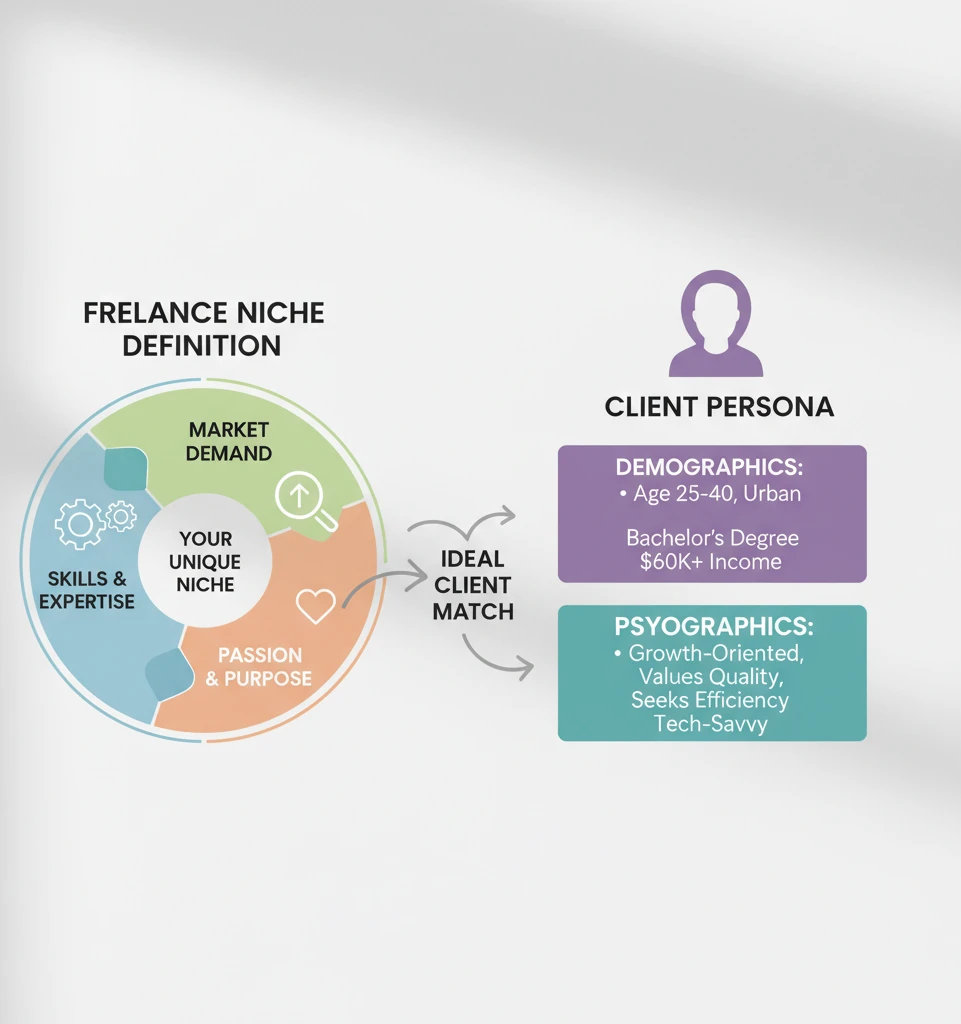
Success in freelancing often hinges on the ability to clearly define your niche. Instead of being a generalist, specializing in a specific area allows you to become an expert, command higher rates, and attract clients who are actively seeking your particular skill set. When choosing a niche, consider your passions, existing skills, market demand, and profitability. For example, a web designer might narrow their focus to creating e-commerce sites for sustainable fashion brands, or a writer might specialize in crafting B2B SaaS content. The decision criteria should include asking yourself: “What problems can I solve better than most?” and “Which industries or client types am I most drawn to and capable of serving effectively?”
Once your niche is established, the next critical step is to define your ideal client profile (ICP). This involves understanding who benefits most from your services, who you enjoy working with, and who can afford to pay your desired rates. Create a detailed profile that includes demographics (industry, company size, location), psychographics (values, challenges, goals), and their specific needs that your services address. For example, an ICP might be a startup founder seeking to launch a new app within six months, requiring strong branding and user experience design. Pitfalls to avoid include targeting too broad an audience, which dilutes your marketing efforts, or pursuing clients who consistently undervalue your work or have unrealistic expectations. A well-defined ICP helps tailor your marketing messages, proposals, and outreach, making client acquisition more efficient and fruitful.
Building a Robust Freelance Business Foundation
Legal Structures and Registration: What Freelancers Need to Know
Establishing a solid legal and administrative foundation is crucial for any freelance business aiming for long-term viability and growth. In 2026, understanding the various legal structures available is the first step. While many freelancers start as sole proprietors due to simplicity, considering options like Limited Liability Companies (LLCs) can offer significant personal liability protection. An LLC separates your personal assets from your business debts and liabilities, which is a vital safeguard, especially as your business grows and takes on larger projects or engages in higher-risk activities. Researching the specific requirements for business registration in your jurisdiction is paramount, which may include obtaining a business license or registering a business name if you are operating under a name other than your own.
Furthermore, understanding your tax obligations is non-negotiable. Freelancers are typically responsible for paying self-employment taxes (Social Security and Medicare) and income taxes. This often involves making quarterly estimated tax payments to avoid penalties. Keeping meticulous records of all income and deductible business expenses is essential for accurate tax filing. Common deductible expenses include home office costs, software subscriptions, professional development, and business travel. Consulting with an accountant or tax professional experienced with freelancers is highly recommended to ensure compliance and maximize your deductions. Additionally, familiarize yourself with contract law basics, as having clear, legally sound contracts with clients is fundamental to protecting your interests and defining project scope, payment terms, and intellectual property rights.
Essential Tools and Technology for Seamless Operations
To operate a freelance business efficiently, the right tools and technology are indispensable. Project management software is key for organizing tasks, tracking deadlines, and collaborating with clients. Popular choices like Asana, Trello, or Monday.com offer varying levels of complexity and features, allowing you to select what best fits your workflow. For communication and collaboration, robust platforms such as Slack, Microsoft Teams, or even Zoom are essential for maintaining clear lines of dialogue with clients and team members, especially in remote settings. These tools facilitate real-time conversations, file sharing, and video conferencing, ensuring that distance is no barrier to effective teamwork.
Financial management tools are equally critical. Accounting software like QuickBooks, Xero, or Wave can help you track income and expenses, send invoices, and manage payments, simplifying tax preparation and providing a clear overview of your business’s financial health. For client management and sales pipelines, Customer Relationship Management (CRM) systems, even simpler ones, can be invaluable. They help you keep track of leads, client interactions, and project history. Don’t overlook cybersecurity measures; strong passwords, two-factor authentication, and secure cloud storage solutions are vital to protect sensitive client data and your own business information. Exploring options for your guide to essential digital marketing tools can also provide insights into software that enhances client outreach and service delivery, which are integral to many freelance professions.
Setting Up Your Workspace for Maximum Productivity
Your physical workspace significantly impacts your productivity, focus, and overall well-being as a freelancer. Ideally, dedicate a specific area in your home solely for work, even if it’s just a corner of a room. This physical separation helps create a mental boundary between your professional and personal life, reducing distractions and signaling to your brain that it’s time to focus. The ergonomics of your setup are paramount. Invest in a comfortable and supportive chair, a desk at the correct height, and ensure proper monitor positioning to prevent strain and discomfort. Good lighting, whether natural or artificial, can reduce eye fatigue and improve mood.
Beyond the basics, consider how the environment can foster concentration. Minimize clutter; an organized workspace reduces mental noise. Personalize the space with elements that inspire you, but avoid over-decorating to the point of distraction. Noise cancellation is also a factor; if your environment is noisy, consider noise-canceling headphones or ambient sound machines. Ensure you have reliable internet access and all necessary equipment readily available. Regularly declutter and re-evaluate your workspace to ensure it continues to meet your needs. For international insights into creating a comfortable work environment, resources like tips on office comfort can offer valuable perspectives.
Mastering Client Acquisition in the Digital Age
Leveraging Online Platforms: Beyond the Basics
While many freelancers are familiar with general freelance marketplaces, truly leveraging online platforms in 2026 means going beyond basic profile setups. This involves strategic profile optimization, active engagement, and understanding how algorithms favor certain behaviors. For instance, on platforms like Upwork or Fiverr, focusing on specialized gigs rather than broad service offerings can attract higher-quality clients. Regularly updating your portfolio with your best recent work, seeking client testimonials, and responding to inquiries promptly are crucial for building trust and visibility. Consider platforms that cater to specific industries, such as Toptal for developers or Contently for writers, to find clients seeking niche expertise.
Beyond traditional marketplaces, social media plays a critical role. LinkedIn, for example, is not just for job seekers; it’s a powerful tool for B2B freelancers to connect with potential clients, share industry insights, and showcase their expertise through articles and posts. Engaging in relevant groups and discussions can position you as a thought leader. Similarly, platforms like Instagram or Behance are vital for visual creatives to display their portfolios. The key is to tailor your approach to each platform, understanding its audience and typical use cases. Building a personal website remains a cornerstone, offering a professional hub to showcase your services, portfolio, and testimonials, which can then be linked from all your online profiles, consolidating your brand presence. For those in web development or design, understanding how to optimize your online presence for search engines is also key; consider delving into resources for mastering WordPress SEO if your work involves this platform.
Crafting Compelling Proposals That Win Projects
A winning freelance proposal is more than just a price quote; it’s a persuasive document that demonstrates your understanding of the client’s problem and clearly articulates how you will provide the solution. The first step is thorough research. Before writing, understand the client’s business, their specific needs, and the context of their project. This allows you to tailor your language and solutions directly to them, avoiding generic templates. Start with a strong opening that acknowledges their challenge and expresses enthusiasm for the opportunity.
Structure your proposal logically: a summary of their needs, your proposed solution with a clear breakdown of deliverables, your process, timelines, and your qualifications. Emphasize the benefits and value you will bring, not just the features of your service. Use clear, concise language, avoiding jargon unless you are certain the client will understand it. Include a call to action, outlining the next steps, such as a discovery call. When discussing pricing, be transparent about your rates and justify them based on the value provided. If possible, include case studies or examples of similar successful projects to build credibility. A polished, well-written proposal that directly addresses the client’s pain points significantly increases your chances of securing the project.
Networking Strategies That Drive Referrals
Effective networking is a cornerstone of sustainable freelance success, shifting from transactional encounters to building genuine relationships. In today’s interconnected world, networking extends far beyond in-person events. Online communities and professional groups are fertile ground for connecting with peers and potential clients. Engaging thoughtfully in discussions, offering valuable advice, and participating in industry-specific forums can establish your reputation and lead to organic referrals. LinkedIn remains a powerful tool for professional networking; actively connect with people in your industry and target client sectors, and engage with their content.
Nurturing existing client relationships is equally crucial. Satisfied clients are your best source of repeat business and referrals. Provide exceptional service, communicate proactively, and check in periodically even after a project is completed. Consider implementing a referral program or simply asking happy clients if they know anyone else who could benefit from your services. Attending relevant industry conferences, workshops, and local meetups (both virtual and in-person) can also lead to valuable connections. The key is consistency and authenticity; focus on providing value and building trust, rather than just asking for business. These connections often lead to opportunities that might not be advertised publicly, offering a more stable stream of work and client acquisition, much like how one might approach career guidance and job search strategies by leveraging networks.
Pricing Strategies That Reflect Your Value and Expertise
Hourly vs. Project-Based Pricing: Which is Right for You?
Choosing between hourly and project-based pricing is a fundamental decision for freelancers, and the optimal choice often depends on the nature of the work, client preferences, and your own comfort level. Hourly pricing is straightforward; you charge for the actual time spent on a project. This model is ideal for unpredictable scopes, ongoing maintenance tasks, or when the client is unsure of the total work required. It ensures you are compensated for every minute worked and protects you if a project runs longer than initially anticipated. However, it can sometimes incentivize inefficiency and may be perceived as a barrier by clients who prefer fixed budgets. A pitfall here is underestimating your hourly rate, which devalues your time.
Project-based pricing, also known as fixed-fee pricing, involves quoting a single price for the entire project. This is preferred by many clients as it offers budget certainty and encourages freelancers to work efficiently. It’s best suited for projects with a well-defined scope and deliverables. To implement this successfully, you must accurately estimate the time and resources required. Overestimating can lead to lost bids, while underestimating can result in working for less than your desired hourly rate. A common strategy is to calculate your estimated hours at your ideal hourly rate and then add a buffer for unexpected issues or scope creep. Consider your experience level; seasoned freelancers can often price projects more accurately than those just starting out.

Calculating Your True Cost and Desired Income
To price your services effectively, you must first understand your true cost of doing business. This goes beyond just your personal living expenses and includes all overheads associated with running your freelance operation. Factors to consider include software subscriptions, hardware, internet and phone bills, insurance, professional development courses, marketing expenses, office supplies, and a portion for taxes. You also need to account for non-billable hours spent on administrative tasks, marketing, and professional development. Multiplying your desired annual income by 1.25 or 1.5 can help account for these non-billable hours and unexpected downtime.
Next, determine your desired annual income. This should cover your living expenses, savings goals, and allow for professional growth. Once you have your total annual expenses (personal + business overheads + taxes) and your desired profit, you can start calculating your target rates. For instance, if your annual business expenses and desired profit total $80,000, and you aim to work 1,500 billable hours per year, your average hourly rate needs to be approximately $53.33 ($80,000 / 1,500 hours). This calculation provides a baseline. You then adjust this based on your experience, the demand for your skills, and the perceived value you deliver to the client. Ignoring these calculations can lead to undercharging and burnout, making it challenging to build a sustainable business.
Handling Price Objections and Value Justification
Price objections are a common part of freelancing, but they don’t have to be deal-breakers. When a client questions your pricing, the most important response is to reiterate the value and benefits you offer, rather than immediately lowering your price. Instead of focusing on your costs, shift the conversation to the return on investment (ROI) they will receive. For example, if you’re a web designer, explain how a well-designed, high-converting website will lead to increased sales or customer acquisition, directly offsetting your fees. Use specific examples or case studies to illustrate the positive outcomes your past clients have experienced.
Another effective tactic is to break down your service into tangible deliverables and explain the expertise required for each. This helps clients understand that your price reflects not just hours worked, but also your skills, experience, and the comprehensive solution you provide. If a client is on a tight budget, explore alternative solutions. This could involve adjusting the scope of the project to fit their budget, offering a phased approach where you tackle the most critical elements first, or proposing a slightly different service package. Transparency and flexibility, coupled with a steadfast belief in the value of your work, are key to navigating price objections successfully. For insights into how value is perceived and communicated in broader business contexts, exploring strategies for boosting your digital marketing ROI can offer transferable principles.
Delivering Exceptional Client Experiences for Long-Term Partnerships
Cultivating strong, long-term relationships with clients is the bedrock of a thriving freelance career. This goes beyond simply completing tasks; it involves creating a positive and memorable experience that encourages repeat business and valuable referrals. The key lies in consistently exceeding expectations, fostering clear communication, and demonstrating a genuine commitment to your clients’ success. When clients feel valued and understood, they are more likely to become loyal advocates for your services, providing a stable foundation for your business growth. This dedication to client satisfaction can transform one-off projects into ongoing collaborations.
Setting Clear Expectations from the Outset
The foundation of any successful client relationship is built on unambiguous expectations established right from the initial consultation. Ambiguity here is a breeding ground for disappointment and conflict. Before commencing any work, invest time in a thorough discovery process to fully understand the client’s objectives, desired outcomes, and any potential constraints. Documenting these agreed-upon deliverables, timelines, and communication protocols in a clear, concise contract or statement of work is paramount. This document serves as a mutual reference point, minimizing misunderstandings and ensuring both parties are aligned. For example, if a client expects daily progress reports but you plan to provide weekly updates, this discrepancy needs to be addressed and clarified upfront. Define project scope rigorously, outlining what is included and, just as importantly, what is excluded, to prevent scope creep.
Effective Communication Techniques for Freelancers
Consistent and transparent communication is the lifeblood of a healthy client-freelancer dynamic. Employ a multi-channel approach that suits your client’s preferences and the project’s complexity. Utilize tools like email for formal documentation, instant messaging for quick queries, and video calls for in-depth discussions or presentations. Active listening is as crucial as clear articulation; ensure you fully grasp your client’s needs and feedback before responding. Provide regular, concise updates on project progress, even if there are no major developments, to keep clients informed and engaged. A common pitfall is assuming clients understand technical jargon; always communicate in clear, accessible language. Consider implementing a project management tool that allows for shared visibility of progress and feedback, fostering a sense of collaboration. For those navigating different career paths, understanding how to communicate effectively across diverse teams can be a significant advantage, much like mastering the nuances of career advancement.
Proactive Problem-Solving and Feedback Management
Challenges are inevitable in any project. The true measure of a freelancer’s professionalism lies in how they handle them. Instead of waiting for issues to escalate, adopt a proactive problem-solving approach. Anticipate potential roadblocks and address them before they impact the project timeline or client satisfaction. When feedback is received, approach it with an open mind and a commitment to improvement. Distinguish between subjective preferences and objective critiques. If feedback seems unclear or contradictory, don’t hesitate to ask clarifying questions. It’s also wise to have a structured process for incorporating revisions; this might involve a set number of revision rounds included in your fee or a clearly defined hourly rate for extensive changes. For instance, if a client requests a design change that fundamentally alters the initial brief, this should be discussed in terms of its impact on the project scope and cost. Managing client expectations around feedback cycles ensures that revisions are handled efficiently and without undue delay.
Streamlining Your Freelance Workflow with Efficient Processes
As a freelancer, your time is your most valuable asset. Implementing efficient workflows and processes is not just about productivity; it’s about sustainability and profitability. A well-oiled operational system allows you to handle more work, deliver higher quality, and reduce the stress associated with juggling multiple clients and deadlines. This involves strategically choosing the right tools, adopting effective methodologies, and continuously seeking ways to optimize your daily tasks. By dedicating effort to streamlining your operations, you free up mental space to focus on creative problem-solving and strategic client engagement, ultimately leading to a more fulfilling and successful freelance career. This operational efficiency can be a game-changer for any entrepreneur.
Project Management Methodologies for Freelancers
Adopting a structured approach to project management can significantly enhance your efficiency and the quality of your deliverables. While complex methodologies like Scrum might be overkill for solo freelancers, principles from Agile or Kanban can be highly effective. Kanban, for instance, uses a visual board to track tasks through different stages (e.g., To Do, In Progress, Done), offering a clear overview of project status and bottlenecks. For tasks that require sequential steps, a simple waterfall approach, adapted for individual work, can be beneficial. The key is to choose a methodology that aligns with your working style and the nature of your projects. Consider breaking down larger projects into smaller, manageable milestones. This not only makes the project feel less daunting but also allows for easier tracking and reporting of progress. Tools like Trello or Asana can help implement these methodologies visually, making it easier to see what needs to be done and by when.
Time Management Hacks for Peak Performance
Maximizing your output often comes down to mastering your time. Techniques like the Pomodoro Technique, which involves working in focused 25-minute intervals separated by short breaks, can boost concentration and prevent burnout. Another effective strategy is time blocking, where you allocate specific blocks of time in your calendar for particular tasks or client projects, treating them like scheduled appointments. Prioritization is also key; tools like the Eisenhower Matrix can help you differentiate between urgent and important tasks, ensuring you’re focusing your energy on what truly matters. Avoid the trap of multitasking, which often leads to reduced efficiency and increased errors. Instead, single-task and dedicate your full attention to one activity at a time. Batching similar tasks, such as responding to emails or making phone calls, can also save significant time by reducing context switching.
Automating Tedious Tasks to Reclaim Your Time
Many administrative and repetitive tasks consume valuable freelance hours that could be better spent on client work or business development. Identifying and automating these chores can lead to substantial time savings and increased profitability. Consider using tools for automated invoicing, which can send reminders and track payments, reducing manual follow-ups. Social media scheduling tools allow you to plan and publish content in advance, freeing up daily management time. For repetitive data entry or report generation, explore automation platforms or even simple scripts if you have the technical skills. Many online services offer integrations that can connect different applications, creating automated workflows. For example, a new client signup in your CRM could automatically trigger a welcome email and a project setup task. As publishing workflows evolve, exploring systems that streamline publishing can offer significant gains.
Financial Management for Freelance Entrepreneurs
Sound financial management is not merely about tracking money; it’s about building a sustainable and profitable freelance business. For many freelancers, financial management often takes a backseat to client work, but neglecting it can lead to cash flow problems, tax liabilities, and missed growth opportunities. A proactive approach ensures you understand your business’s financial health, enabling informed decision-making, better planning, and long-term stability. This section will cover the essential aspects, from ensuring timely payments to building a financial cushion.
Invoicing Best Practices and Payment Terms
Accurate and timely invoicing is critical for maintaining healthy cash flow. Your invoices should be professional and comprehensive, including all necessary details: your business name and contact information, the client’s details, a unique invoice number, the date of issue, a clear description of services rendered, the total amount due, and applicable taxes. Clearly state your payment terms upfront, such as “Net 15” (payment due within 15 days) or “Net 30.” Avoid vague terms like “due upon receipt.” Offer multiple payment options if feasible, such as bank transfers, online payment gateways, or checks, to accommodate client preferences. Implement a system for sending out invoices promptly after project completion or according to your agreed-upon billing cycle. Don’t underestimate the power of a polite but firm follow-up on overdue payments. For instance, a simple reminder email a few days before the due date can often prevent late payments.
Tracking Income and Expenses for Tax Purposes
Diligent tracking of both income and expenses is non-negotiable for any freelance business, especially when tax season arrives. Establish a robust system for recording every transaction, no matter how small. Use accounting software or a detailed spreadsheet to categorize income by client and expenses by type (e.g., software subscriptions, office supplies, travel, professional development). This detailed record-keeping not only simplifies tax preparation but also provides valuable insights into your business’s profitability and spending patterns. Accurate expense tracking allows you to claim legitimate business deductions, reducing your overall tax liability. Consider setting aside a portion of your income for taxes throughout the year to avoid a large, unexpected bill. Consulting with a tax professional can help ensure you are compliant and taking advantage of all available deductions.
Building a Financial Safety Net: Savings and Investments
For freelancers, income can be unpredictable. Building a financial safety net through savings is crucial for weathering slow periods, unexpected personal expenses, or business emergencies. Aim to build an emergency fund that can cover 3-6 months of essential living and business expenses. Beyond an emergency fund, consider investing for long-term growth. This could involve traditional investment vehicles like stocks and bonds or reinvesting profits back into your business to scale operations or develop new services. Understanding your risk tolerance and financial goals is key to making informed investment decisions. For some, this might involve diversifying their income streams or exploring passive income opportunities. A well-managed financial future provides peace of mind and the freedom to pursue growth opportunities without constant financial anxiety.
Marketing Your Freelance Services Without Breaking the Bank
Effective marketing is essential for attracting new clients and growing your freelance business, but it doesn’t have to require a massive budget. Many powerful marketing strategies are cost-effective and can be implemented with consistent effort. The focus should be on building a strong online presence, showcasing your expertise, and leveraging existing networks. By strategically applying these techniques, you can reach your target audience, establish credibility, and generate a steady stream of leads without significant financial outlay. This section explores practical, budget-friendly marketing approaches.
Content Marketing Strategies for Freelancers
Content marketing involves creating and distributing valuable, relevant, and consistent content to attract and retain a clearly defined audience — and, ultimately, to drive profitable customer action. For freelancers, this means positioning yourself as an expert in your field. Start a blog on your website, sharing insights, tips, and tutorials related to your services. This not only helps with SEO, making your services more discoverable, but also demonstrates your knowledge. Consider creating infographics, short videos, or downloadable guides that address common client pain points. For example, a web designer might create a guide on building high-converting websites. Regularly sharing this content on social media and through email newsletters can attract potential clients and nurture leads. Consistency is key; aim to publish new content regularly to keep your audience engaged and your services top-of-mind.
Social Media Presence: Building Authority and Trust
A well-maintained social media presence is a powerful tool for freelancers to connect with potential clients and build a community around their brand. Choose the platforms where your target audience is most active (e.g., LinkedIn for B2B services, Instagram for visual fields). Share valuable content, engage in industry discussions, and interact with your followers. Showcase your personality and expertise through posts, stories, and live sessions. Instead of just promoting your services, focus on providing value, answering questions, and offering helpful advice. This builds trust and positions you as a go-to expert. Participating in relevant online groups or forums can also expand your reach and introduce you to new prospects. Remember, social media is a marathon, not a sprint; consistent engagement over time yields the best results.
The Power of Testimonials and Case Studies
Social proof is incredibly persuasive. Testimonials and case studies provide tangible evidence of your skills and the positive impact you’ve had on clients’ businesses. Actively request testimonials from satisfied clients upon project completion. These can be short quotes or more detailed endorsements. Case studies go a step further, detailing a specific client project, the problem you solved, your solution, and the quantifiable results achieved. For example, a graphic designer might present a case study showing how their branding efforts increased a client’s sales by 15% in six months. Feature these prominently on your website, in your proposals, and on your social media profiles. Positive feedback from real clients dramatically enhances your credibility and reduces perceived risk for prospective customers, making them more likely to choose your services over competitors.
Scaling Your Freelance Business for Sustainable Growth
As your freelance career matures, transitioning from individual contributor to a growing business entity requires strategic planning. Scaling doesn’t just mean taking on more clients; it involves optimizing operations, increasing revenue per client, and building a sustainable model. A key element of this is understanding your profitability metrics and identifying which services or client types yield the highest returns. Many freelancers stagnate because they haven’t established clear benchmarks for success, such as average project value, client lifetime value, or profit margins per service. Regularly analyzing these numbers helps in making informed decisions about resource allocation and future business development. For instance, a graphic designer might notice that branding packages consistently offer higher profit margins than individual social media graphics. This insight can guide marketing efforts towards attracting more clients seeking comprehensive branding solutions, rather than focusing on lower-value, one-off projects. Implementing systems for client onboarding, project management, and invoicing are crucial foundational steps that prevent operational bottlenecks as demand increases.
One of the most significant scaling levers is judiciously raising your rates. This isn’t about arbitrary price hikes but about aligning your pricing with the value you deliver and the evolving market demand. When clients perceive higher value, they are often willing to pay more. Consider the scope of work, the expertise required, and the impact your services have on the client’s business. For example, if your web design services directly led to a 30% increase in a client’s online sales, your pricing should reflect that tangible outcome. A common pitfall is waiting too long to increase rates, which can lead to burnout and underappreciation. A good rule of thumb is to reassess pricing annually, or whenever you take on a significant new skill or deliver exceptional results. Analyzing competitor pricing can provide context, but your own value proposition should be the primary driver.
As your workload intensifies, the ability to delegate tasks and hire support becomes paramount for scaling. Initially, this might involve outsourcing administrative tasks like scheduling, email management, or basic bookkeeping to a virtual assistant. As your business grows, you might consider hiring specialized freelancers for tasks that are not core to your expertise or that consume too much of your billable time. For instance, a content writer might hire a proofreader or a researcher. The key is to identify repetitive, time-consuming, or less strategic tasks that can be effectively handed off. A common mistake is trying to do everything yourself, which limits your capacity and prevents you from focusing on high-value activities like client acquisition and strategic development. Ensure you establish clear communication protocols, performance expectations, and provide adequate training or resources to your support team to maintain quality and efficiency.
Diversifying your income streams is a robust strategy to build resilience and unlock new growth avenues. Relying solely on one client or service type makes your business vulnerable to market fluctuations or shifts in client needs. Consider creating passive income streams, such as developing and selling digital products like e-books, templates, or online courses related to your expertise. For example, a freelance copywriter could create a course on “Advanced Sales Copywriting Techniques.” Another avenue is offering tiered service packages that cater to different client budgets and needs, from a basic consultation to a comprehensive project management solution. Exploring affiliate marketing for tools or services you genuinely use and recommend can also contribute to diversified income. This approach not only stabilizes your revenue but also expands your market reach and brand authority.
When and How to Raise Your Rates
Deciding when to increase your freelance rates involves a careful evaluation of your market position, client value, and personal financial goals. A strong indicator that it’s time to raise prices is consistently high demand for your services, leading to fully booked schedules and a waiting list. If you find yourself turning down profitable work or experiencing client fatigue due to overcommitment, your current rates are likely too low. Another crucial factor is the demonstrable value you bring to your clients. Have your services consistently led to measurable improvements in their business, such as increased revenue, enhanced brand visibility, or improved efficiency? If so, your rates should reflect this impact. Consider industry benchmarks, but don’t let them dictate your ceiling; focus on your unique selling proposition and the ROI you deliver. A phased approach can be effective: inform existing clients well in advance of any rate changes, perhaps offering them a transition period or a slight discount on future projects if they commit within a specific timeframe. For new clients, implement the new rates immediately. A common pitfall is the fear of losing clients; however, losing clients who are only attracted by the lowest price can be a positive outcome, freeing up your capacity for higher-paying, more engaged clientele.
Delegating Tasks and Hiring Support
As your freelance business scales, the strategic delegation of tasks is essential for freeing up your time and leveraging specialized skills. Identify tasks that are repetitive, time-consuming, or fall outside your core competencies. This could range from administrative duties like scheduling appointments and managing emails to more specialized work such as graphic design for marketing materials or data entry for research projects. When considering hiring support, start by assessing your current workload and pinpointing the activities that drain your energy or take you away from high-impact client work. A virtual assistant can be an excellent starting point for managing your calendar and inbox, allowing you to focus on client calls and project delivery. As your revenue grows, you might look to hire other freelancers for specific project components, such as a copy editor for written content or a social media manager for your marketing efforts. A common mistake is waiting too long to delegate, leading to burnout and limiting your business’s growth potential. Clearly define the scope of work, expectations, and desired outcomes for any delegated task, and establish regular communication channels to ensure quality and alignment. The goal is to build a support system that enhances your efficiency and allows you to focus on strategic growth.
Diversifying Your Income Streams
Relying on a single source of income can leave your freelance business vulnerable. Diversifying your revenue streams creates a more stable and resilient business model. One effective method is to develop and sell digital products that leverage your expertise. This could include e-books, templates, online courses, or presets, providing a scalable income source that requires upfront effort but minimal ongoing time investment per sale. For instance, a freelance photographer could create and sell Lightroom presets or a tutorial on achieving specific lighting effects. Another strategy is to offer a range of service packages at different price points, catering to a broader client base. This might involve a basic consultation service, a mid-tier project package, and a premium retainer service for ongoing support. Furthermore, exploring affiliate marketing by recommending tools, software, or resources you genuinely use and believe in can generate additional revenue without adding significant work. The key is to identify opportunities that align with your existing skills and audience, transforming your expertise into multiple profitable avenues and reducing your dependence on any single client or project.
Staying Ahead: Adapting to the Future of Freelancing
The freelance landscape is in constant flux, driven by technological advancements and evolving client expectations. To thrive, freelancers must adopt a mindset of continuous adaptation and proactively embrace change. This involves staying informed about emerging trends, understanding how new technologies can enhance your services, and being willing to upskill or pivot your offerings. Many freelancers fall into the trap of complacency, continuing to offer the same services with the same tools as they did years ago, only to find their skills becoming obsolete or their services less in demand. Proactive adaptation ensures you remain competitive and relevant in a dynamic market. This might mean learning a new software, understanding a novel marketing technique, or even shifting your specialization to align with growing industry needs. The future of work is increasingly flexible and technology-driven, and freelancers who embrace this will be best positioned for long-term success.
One of the most impactful ways to stay ahead is by embracing new technologies and AI tools. Artificial intelligence, in particular, is rapidly transforming various industries, and freelancing is no exception. AI-powered tools can automate repetitive tasks, enhance creativity, improve efficiency, and even offer new service possibilities. For example, AI writing assistants can help draft content outlines or generate initial copy, freeing up writers to focus on strategy and refinement. In graphic design, AI tools can generate image variations or assist with color palette selection. For web developers, AI can aid in code generation or bug detection. A crucial aspect is not to view AI as a replacement for human creativity or expertise, but as a powerful augmentative tool. The pitfall lies in ignoring these advancements, which can lead to competitors who leverage AI operating faster and more affordably. Regularly exploring and experimenting with relevant AI platforms can unlock significant efficiency gains and open up new service offerings, such as AI consulting or prompt engineering. Many businesses are actively seeking professionals who can help them integrate these tools into their workflows, as highlighted in discussions about unlocking business growth with AI.
Continuous learning and skill development are no longer optional but essential for freelance longevity. The skills that were in demand five years ago may be less so today, and the emergence of new technologies and methodologies requires constant re-evaluation of your professional toolkit. This commitment to learning should extend beyond technical skills to include soft skills like communication, problem-solving, and adaptability. Consider the rapidly evolving landscape of digital marketing; staying current with algorithm changes, new platform features, and effective digital marketing ROI strategies is crucial for marketers. For freelancers in web design, keeping pace with advancements in user experience (UX) design and build high-converting websites principles is vital. Invest time in online courses, industry conferences, webinars, and reading authoritative blogs and publications. Developing new skills can also lead to opportunities for career advancement or pivots, akin to navigating a career change. Remember, your skills are your primary asset, and continuous investment in them ensures your freelance business remains competitive and profitable.
Embracing New Technologies and AI Tools
The rapid integration of new technologies, particularly artificial intelligence (AI), presents both opportunities and challenges for freelancers. To remain competitive, it’s imperative to actively explore and adopt tools that can streamline your workflows, enhance your output, and potentially create new service avenues. For example, AI-powered writing assistants can significantly speed up content creation by generating outlines, drafting sections, or suggesting improvements. Similarly, AI design tools can assist with generating concepts, editing images, or automating repetitive design tasks. When evaluating new technologies, consider their practical application to your specific niche. Don’t chase every new tool; instead, focus on those that offer a clear benefit, whether it’s increased efficiency, improved quality, or the ability to offer novel services. For instance, a freelance data analyst might leverage AI for predictive modeling or advanced data visualization, offering clients deeper insights. A common pitfall is resistance to change or a fear that AI will replace human roles. Instead, view AI as a powerful collaborator that augments your skills, allowing you to focus on higher-level strategic thinking and client relationships. Understanding how to effectively utilize these tools is becoming a valuable skill in itself, as evidenced by the growing demand for professionals who can unlock business growth with AI.
Continuous Learning and Skill Development
The freelance economy demands a commitment to lifelong learning. The skills and knowledge that made you successful yesterday might not be sufficient for tomorrow. Regularly assessing your current skill set against industry trends is crucial. This involves not only technical proficiencies but also soft skills like communication, negotiation, and adaptability, which are vital for career advancement. For professionals in the digital realm, staying updated on the latest best practices in areas like SEO, social media marketing, or web development is non-negotiable. For instance, a freelance writer needs to understand evolving content strategies and search engine algorithms, possibly exploring areas like Mastering WordPress SEO. The best approach is to dedicate specific time each week or month for learning, whether through online courses, industry workshops, reading relevant publications, or attending webinars. A practical way to integrate learning is by taking on smaller projects that challenge you to acquire a new skill, effectively learning on the job. This proactive approach ensures you remain adaptable, valuable, and capable of taking on more complex and higher-paying projects throughout your freelance career.
Navigating Freelancer Burnout and Maintaining Well-being
Burnout is a significant threat to freelance sustainability, often stemming from blurred boundaries between work and personal life, an unsustainable workload, or a lack of perceived control. To combat this, establishing clear work hours, setting realistic deadlines, and learning to say “no” to projects that don’t align with your capacity or goals are fundamental. Prioritizing self-care, including regular breaks, exercise, and sufficient sleep, is not a luxury but a necessity for maintaining productivity and creativity. Many freelancers find that implementing a structured routine and dedicated workspaces helps create a mental separation between professional and personal life, even when working from home. Furthermore, building a strong support network, whether through online communities of fellow freelancers or personal relationships, can provide emotional and practical encouragement. Regularly reflecting on your work-life balance and making conscious adjustments is key. Consider this an ongoing process, much like refining your job search – it requires continuous effort and strategy. Seeking professional help, such as therapy or coaching, can also be invaluable when managing persistent stress or overwhelm.
Comments
0 comments