
Last Updated on February 25, 2026 by Prabhakar A
Artificial intelligence (AI) is rapidly transforming the digital marketing landscape, offering unprecedented opportunities for automation, personalization, and data-driven decision-making. Businesses that embrace AI stand to gain a significant competitive advantage, while those who ignore it risk falling behind. This guide explores the practical applications of AI in digital marketing, providing actionable insights and strategies for implementation.
From content creation to personalized customer experiences, AI is reshaping how marketers operate. By understanding the core AI technologies and their potential, marketers can unlock new levels of efficiency, engagement, and ultimately, ROI. Let’s dive into how to practically leverage AI in your 2026 digital marketing strategy.
Table of Contents
Staying Ahead: Why AI is No Longer Optional for Digital Marketers in 2026
The Shifting Landscape: Automation, Personalization, and Data-Driven Decisions
The digital marketing landscape has drastically shifted. No longer can businesses rely solely on traditional methods. Consumers expect personalized experiences, and AI empowers marketers to deliver just that. Automation streamlines repetitive tasks, freeing up marketers to focus on strategic initiatives. AI-powered tools analyze vast datasets to uncover hidden insights, enabling data-driven decisions that optimize campaigns for maximum impact. This shift necessitates understanding and adopting AI to remain competitive.
Consequences of Ignoring AI: Falling Behind Competitors and Losing Market Share
Ignoring AI in 2026 carries significant risks. Competitors leveraging AI gain advantages in efficiency, personalization, and customer acquisition. They can create more engaging content, target the right audience with tailored messages, and optimize campaigns in real-time. Businesses clinging to outdated methods will struggle to compete, experiencing lower conversion rates, higher customer acquisition costs, and ultimately, a shrinking market share. The gap between AI-powered marketers and those lagging behind will widen exponentially in the coming years. Furthermore, opportunities to enhance your web design for conversions will be missed by non-adopters. This makes ignoring AI not just a missed opportunity, but a direct pathway to competitive disadvantage.
Understanding the Core AI Technologies Powering Digital Marketing
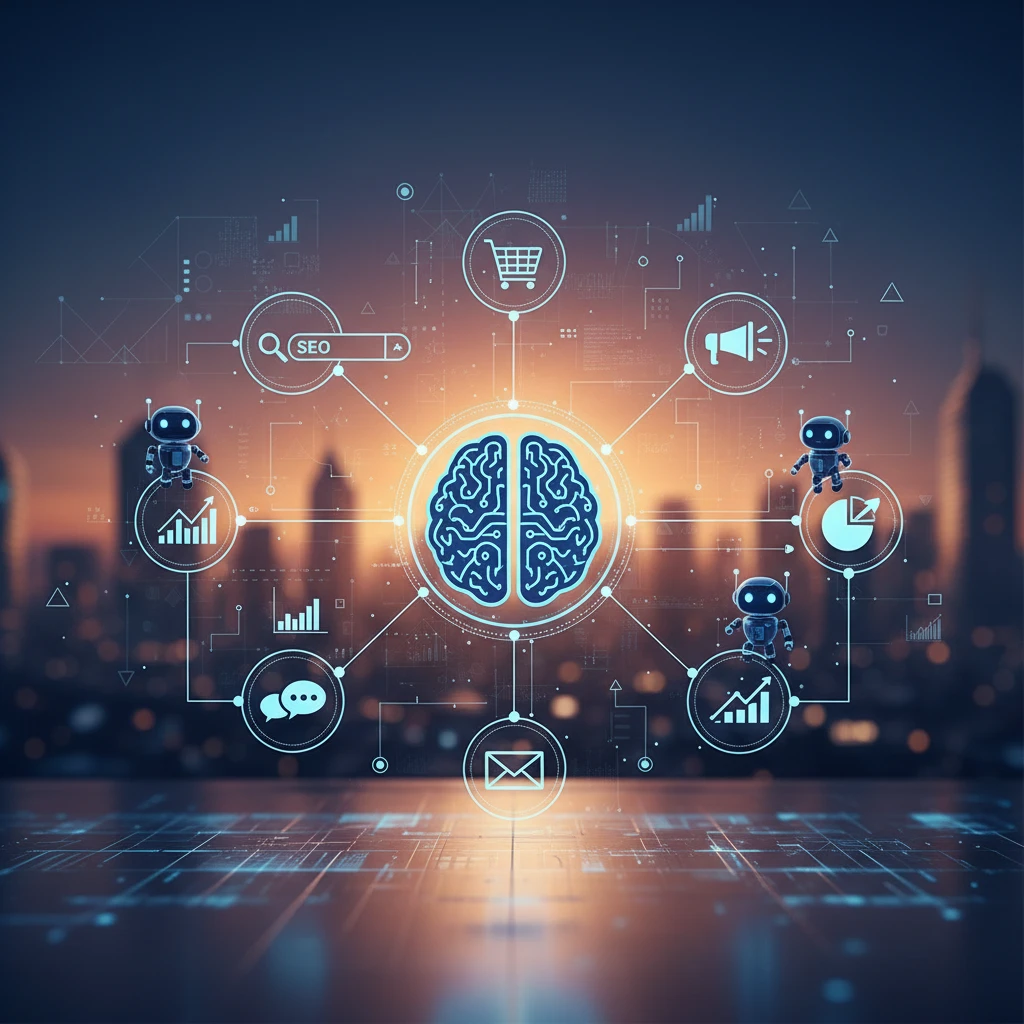
Natural Language Processing (NLP): Analyzing Text and Sentiment
Natural Language Processing (NLP) allows computers to understand and process human language. In digital marketing, NLP is used for sentiment analysis, understanding customer reviews, chatbots, and creating targeted content. For example, NLP can analyze social media comments to identify brand sentiment, allowing marketers to address negative feedback and amplify positive messages. It also powers chatbots that provide instant customer support and qualify leads. Furthermore, NLP can be used to generate keyword-rich content and optimize website copy for search engines. The accuracy of NLP models increases every year, making this technology a cornerstone of modern marketing analytics. A robust understanding of SEO is essential for this, and platforms like Daily SEO Blogs: From Zero to Published, Automatically can help to stay updated.
Machine Learning (ML): Predicting Customer Behavior and Automating Tasks
Machine Learning (ML) enables computers to learn from data without explicit programming. In digital marketing, ML algorithms predict customer behavior, personalize recommendations, and automate tasks like ad bidding. For example, ML can analyze past purchase data to recommend products a customer is likely to buy, increasing sales and customer loyalty. It also powers programmatic advertising, automatically adjusting bids based on real-time performance data. ML algorithms also improve email marketing by optimizing send times based on user engagement. It is crucial to select appropriate ML models based on the available data and business objectives. Considerations include data size, model complexity, and interpretability.
Computer Vision: Analyzing Images and Videos for Marketing Insights
Computer vision allows computers to “see” and interpret images and videos. In digital marketing, computer vision is used for image recognition, object detection, and facial recognition. This helps marketers understand how users interact with visual content. For example, computer vision can analyze images on social media to identify brand logos, providing insights into brand mentions and user-generated content. It also powers visual search, allowing users to find products by uploading an image. Furthermore, computer vision can analyze video content to identify key scenes and optimize video ads for maximum engagement. It’s important to be mindful of privacy regulations and ensure ethical use of facial recognition technology.
AI-Powered Content Creation: Boosting Efficiency and Engagement
AI Writing Tools: Generating Blog Posts, Social Media Updates, and Ad Copy
AI writing tools can generate various types of content, from blog posts to social media updates to ad copy. These tools use NLP and ML to create engaging and informative content based on user input. For example, you can input a topic and keywords, and the AI tool will generate a blog post outline and draft content. You can also use AI to create multiple versions of ad copy, testing different headlines and calls to action to optimize performance. While AI writing tools can significantly speed up content creation, it’s important to review and edit the output to ensure accuracy and maintain brand voice.
Image and Video Generation: Creating Visual Content at Scale
AI image and video generation tools enable marketers to create visual content at scale. These tools use generative models to create unique images and videos based on user input. For example, you can input a text description and the AI tool will generate an image that matches the description. You can also use AI to create animated videos, product demonstrations, and social media stories. This technology allows marketers to create compelling visual content quickly and cost-effectively, even without extensive design skills. However, quality can vary significantly, requiring careful selection of tools and prompt engineering to achieve desired results.
The Importance of Human Oversight: Maintaining Brand Voice and Accuracy
While AI tools offer numerous benefits for content creation, human oversight remains crucial. AI-generated content may lack the nuance and creativity of human-written content, and it’s important to ensure that it aligns with your brand voice and values. Human editors can review and edit AI-generated content to improve its accuracy, clarity, and overall quality. They can also add personal touches and ensure that the content resonates with your target audience. Relying solely on AI without human oversight can damage your brand reputation and lead to inaccurate or misleading information. Brand voice guides and style guides can help editors ensure consistency.
Personalization at Scale: Delivering Tailored Experiences with AI
Dynamic Content Optimization: Adapting Website Content to Individual Users
Dynamic content optimization (DCO) uses AI to adapt website content to individual users based on their behavior, demographics, and preferences. For example, a website can display different headlines, images, and calls to action to different users based on their past interactions with the site. DCO can significantly improve engagement and conversion rates by delivering personalized experiences that resonate with each user. Implementing DCO requires careful planning and data analysis. Define target audiences, identify key personalization variables, and test different content variations to optimize performance.
Personalized Email Marketing: Crafting Targeted Messages Based on User Data
AI empowers personalized email marketing by enabling marketers to craft targeted messages based on user data. For example, you can segment your email list based on demographics, purchase history, and browsing behavior, and send personalized emails to each segment. AI can also analyze email open rates and click-through rates to optimize subject lines and email content for maximum engagement. Personalized email marketing can significantly improve email open rates, click-through rates, and conversion rates. The risk of being seen as spam is higher with unsegmented lists, so make sure to use a reputable email marketing provider. Also be sure to follow best practices for email deliverability.
Product Recommendations: Guiding Customers to Relevant Purchases
AI-powered product recommendations guide customers to relevant purchases by analyzing their browsing history, purchase history, and preferences. For example, e-commerce websites can display “Recommended for You” sections that feature products similar to those a customer has previously viewed or purchased. AI can also analyze customer reviews to identify trending products and recommend them to other users. Product recommendations can significantly increase sales and customer satisfaction by helping customers find the products they need. This can be paired with effective Web Design Tips: Creating a User-Friendly Website to enhance usability.
Supercharging SEO with Artificial Intelligence
AI has revolutionized Search Engine Optimization (SEO) by providing tools and techniques that automate and optimize various aspects of the process. From keyword research to content optimization and link building, AI algorithms can analyze massive datasets, identify patterns, and provide actionable insights that help improve website rankings. However, it’s crucial to remember that AI in SEO is a tool to augment human expertise, not replace it entirely. Over-reliance on AI without critical oversight can lead to unintended consequences, such as keyword stuffing or the generation of low-quality content. It is important to ensure you create a user-friendly website for your audience. Additionally, be wary of “black box” AI tools where the reasoning behind suggestions is opaque; transparency is key to understanding and validating AI-driven recommendations.
Keyword Research: Identifying High-Potential Keywords with AI-Powered Tools
AI-powered keyword research tools go beyond traditional methods by analyzing search intent, competition, and related topics to identify keywords with high potential. These tools use natural language processing (NLP) to understand the context and semantic meaning of keywords, providing a more nuanced understanding of user search behavior. For example, instead of just identifying “digital marketing course” as a valuable keyword, an AI-powered tool might also suggest “best online marketing training” or “digital marketing certification for career change” based on user intent. Decision criteria for choosing an AI keyword research tool should include the size of its keyword database, the accuracy of its search volume estimates, and its ability to identify long-tail keywords and related topics. A pitfall to avoid is focusing solely on keywords with high search volume without considering their relevance to your business and the competitiveness of the search landscape.
Content Optimization: Enhancing On-Page SEO with AI-Driven Suggestions
AI can assist in optimizing on-page SEO elements such as title tags, meta descriptions, headings, and body content. AI-powered tools can analyze existing content, identify areas for improvement, and suggest optimizations that align with search engine ranking factors. These tools can also provide insights into readability, keyword density, and the overall quality of the content. For example, an AI content optimization tool might suggest rewriting a title tag to include a specific keyword, shortening a meta description to fit within the character limit, or adding internal links to relevant pages. The key to effective AI-driven content optimization is to strike a balance between adhering to SEO best practices and creating high-quality, engaging content that provides value to the user. One crucial aspect is writing in simple language and web design for conversions.
Link Building: Identifying and Targeting Relevant Websites for Backlinks
AI can assist in identifying potential link building opportunities by analyzing website content, authority, and relevance to your niche. AI-powered tools can crawl the web, identify websites that mention your keywords or related topics, and assess their suitability for link building. These tools can also analyze the backlink profiles of your competitors to identify potential link sources. The process involves looking at the linking site’s domain authority, relevance, and traffic. A common pitfall is focusing on acquiring backlinks from low-quality or irrelevant websites, which can harm your search engine rankings.
AI-Driven Social Media Marketing: Automating and Optimizing Campaigns
AI is rapidly transforming social media marketing by automating tasks, optimizing campaigns, and personalizing user experiences. From scheduling posts and identifying target audiences to analyzing sentiment and monitoring brand reputation, AI-powered tools can help marketers streamline their workflows and improve their ROI. However, authenticity remains crucial. Over-reliance on AI-generated content can result in generic and impersonal posts that fail to resonate with your audience. Remember, social media is about building relationships, and that requires a human touch. Use AI to augment your efforts, not replace them. For example, use AI to analyze hashtag performance, but rely on your own creativity to craft compelling and authentic captions.
Content Scheduling and Posting: Automating Social Media Management
AI-powered tools can automate social media content scheduling and posting, freeing up marketers to focus on other tasks. These tools analyze historical data, identify optimal posting times, and schedule content accordingly. They can also automatically generate captions, hashtags, and images based on the topic of the post. A common challenge is to ensure that the automated content is still engaging and relevant to the target audience. Decision criteria for choosing a scheduling tool should include its integration with different social media platforms, its ability to customize posting schedules, and its analytics capabilities. These analytics will provide you with valuable data for your next posts.
Audience Segmentation: Identifying and Targeting Specific User Groups
AI can analyze social media data to identify and segment audiences based on demographics, interests, and behaviors. This allows marketers to target their messages to specific user groups, increasing the relevance and effectiveness of their campaigns. AI algorithms can identify patterns and correlations in social media data that would be difficult or impossible for humans to detect manually. A pitfall to avoid is creating segments that are too narrow or too broad, as this can lead to inefficient targeting and wasted ad spend. Also, ensure your audience segmentation aligns with lean principles to maximize efficiency.
Sentiment Analysis: Monitoring Brand Reputation and Responding to Customer Feedback
AI-powered sentiment analysis tools can monitor social media conversations to identify mentions of your brand and analyze the sentiment expressed in those mentions. This allows you to track your brand reputation, identify potential crises, and respond to customer feedback in a timely manner. Sentiment analysis tools use natural language processing (NLP) to classify the sentiment expressed in social media posts as positive, negative, or neutral. Example: An AI sentiment analysis tool detects a surge in negative mentions of a company’s product on Twitter due to a recent product recall. The company can then proactively respond to these complaints and offer solutions, mitigating potential damage to its brand reputation.
Optimizing Advertising Campaigns with AI: Maximizing ROI and Reducing Costs
AI is transforming online advertising by automating bid management, optimizing ad targeting, and personalizing ad creatives. By analyzing vast amounts of data, AI algorithms can identify patterns and trends that would be difficult or impossible for humans to detect, leading to improved campaign performance and reduced costs. However, be cautious of relying solely on AI without human oversight. AI algorithms can sometimes make decisions that are not aligned with your business goals or brand values. Regularly review your AI-powered advertising campaigns to ensure they are delivering the desired results and that they are not inadvertently targeting inappropriate audiences.
Predictive Bidding: Automating Bid Management Based on Performance Data
AI-powered predictive bidding tools can automate bid management based on real-time performance data. These tools analyze historical data, predict future performance, and adjust bids accordingly, ensuring that you are always bidding optimally for each keyword and placement. By continuously monitoring campaign performance and adjusting bids in real-time, predictive bidding tools can help you maximize your ROI and reduce your costs. Decision criteria for choosing a predictive bidding tool should include its accuracy in predicting performance, its ability to customize bidding strategies, and its integration with your advertising platform. A potential pitfall is setting overly aggressive bidding targets, which can lead to increased costs and reduced profitability.
Ad Targeting: Identifying and Targeting the Most Relevant Audiences
AI can analyze user data to identify and target the most relevant audiences for your ads. AI-powered ad targeting tools can analyze demographics, interests, behaviors, and online activity to identify users who are most likely to be interested in your products or services. This allows you to target your ads to specific user groups, increasing the relevance and effectiveness of your campaigns. This improves your conversions, click through rates, and overall revenue. Example: An AI-powered ad targeting tool identifies users who have recently visited websites related to travel and adventure. The company can then target these users with ads for its travel packages and tours, increasing the likelihood of generating leads and sales.
A/B Testing: Continuously Optimizing Ad Creatives and Messaging
AI can automate A/B testing, allowing you to continuously optimize your ad creatives and messaging. AI-powered A/B testing tools can automatically create variations of your ads, test them against each other, and identify the best performing versions. This allows you to continuously improve your ad performance and maximize your ROI. A common pitfall is running A/B tests without a clear hypothesis or goal. Before you start A/B testing, clearly define what you are trying to achieve and what metrics you will use to measure success.
Chatbots and AI-Powered Customer Service: Enhancing Customer Experience
AI-powered chatbots are transforming customer service by providing instant support, personalizing interactions, and gathering valuable data. These chatbots can handle a wide range of customer inquiries, from answering frequently asked questions to resolving complex issues, freeing up human agents to focus on more challenging tasks. However, it’s important to ensure that your chatbots are well-trained and capable of providing accurate and helpful information. Poorly designed chatbots can lead to frustration and dissatisfaction among customers. Also ensure that there’s a seamless handoff to a human agent when the chatbot cannot resolve the issue.
24/7 Availability: Providing Instant Support to Customers
AI-powered chatbots can provide 24/7 support to customers, regardless of their location or time zone. This ensures that customers can always get the help they need, even outside of regular business hours. Chatbots can handle a wide range of customer inquiries, from answering frequently asked questions to providing product information and resolving technical issues. Example: A customer is experiencing a problem with a company’s product at 3 AM. The customer can contact the company’s chatbot, which can provide instant support and resolve the issue without the need for a human agent.
Personalized Interactions: Delivering Tailored Recommendations and Solutions
AI can personalize customer interactions by analyzing customer data and providing tailored recommendations and solutions. AI-powered chatbots can analyze customer purchase history, browsing behavior, and demographic information to provide personalized recommendations for products, services, and content. This can lead to increased sales, improved customer satisfaction, and stronger customer loyalty. Example: An AI-powered chatbot analyzes a customer’s purchase history and recommends a new product that is similar to products they have purchased in the past. The chatbot can also provide personalized discounts and promotions to encourage the customer to make a purchase.
Data Collection and Analysis: Gathering Insights into Customer Needs and Preferences
AI-powered chatbots can collect and analyze data on customer interactions, providing valuable insights into customer needs and preferences. This data can be used to improve product development, marketing strategies, and customer service processes. By analyzing chatbot conversations, you can identify common customer pain points, understand customer preferences, and identify opportunities to improve the overall customer experience. This can also help improve your job insights within the marketing team. Example: An AI-powered chatbot analyzes customer conversations and identifies a common complaint about a specific product feature. The company can then use this information to improve the product feature and address the customer complaint.
Ethical Considerations and Potential Pitfalls of Using AI in Marketing
The integration of AI in digital marketing isn’t without its ethical dilemmas and potential pitfalls. Ignoring these aspects can lead to negative consequences, including reputational damage, legal issues, and loss of customer trust. It’s crucial to approach AI implementation with a strong ethical framework.
Data Privacy and Security: Protecting Customer Data from Misuse
AI algorithms thrive on data, and often that data is sensitive customer information. Failing to adequately protect this data can lead to breaches, identity theft, and other serious security incidents. Consider implementing robust data encryption methods, adhering to data privacy regulations like GDPR or CCPA, and providing clear opt-in/opt-out options for data collection. Regularly audit your data security protocols and conduct penetration testing to identify vulnerabilities. A key decision criterion when selecting AI tools should be their adherence to stringent security standards. A major pitfall is assuming that data anonymization is foolproof; re-identification is often possible with sophisticated techniques.
Example: A hypothetical marketing firm, “DataLeap Solutions,” suffered a data breach where customer purchase history was exposed. This resulted in a class-action lawsuit and a significant drop in their customer base, highlighting the importance of proactive data security measures. Consider consulting with cybersecurity experts to ensure your data is protected.
Bias and Discrimination: Ensuring Fairness and Inclusivity in AI Algorithms
AI algorithms are trained on data, and if that data reflects existing societal biases, the AI will perpetuate and even amplify those biases. This can lead to discriminatory marketing practices, such as targeting specific demographics with certain ads based on stereotypes. To mitigate bias, diversify your training data, use bias detection tools to identify and correct skewed outcomes, and regularly audit your AI models for fairness. Actively involve diverse teams in the development and testing phases. The decision to use an AI tool should include an assessment of its potential for bias. A significant pitfall is assuming that an algorithm is neutral simply because it’s code; algorithms reflect the biases of their creators and the data they are trained on. One way to check for these issues is to perform statistical analysis using tools such as Google’s Fairness Indicators.
Transparency and Explainability: Understanding How AI Makes Decisions
Many AI algorithms, particularly deep learning models, are “black boxes,” meaning it’s difficult to understand how they arrive at a particular decision. This lack of transparency can be problematic from an ethical and practical standpoint. Consumers have a right to understand why they are being targeted with certain ads or why they are being offered a particular product. Prioritize AI solutions that offer explainable AI (XAI) features, allowing you to understand the factors driving the algorithm’s decisions. Provide clear explanations to customers about how AI is being used to personalize their experience. A pitfall is blindly trusting AI recommendations without understanding the underlying reasoning. Decision-making should involve human oversight, particularly when high-stakes decisions are involved.
Example: A bank using AI to approve loan applications needs to be able to explain why an application was rejected, not just cite the AI’s decision. This transparency builds trust and allows for human review of potentially biased outcomes.
Getting Started with AI: Practical Steps and Resources for Digital Marketers
Integrating AI into your marketing strategy doesn’t have to be overwhelming. By taking a strategic and phased approach, you can gradually leverage the power of AI to improve your marketing performance. It’s important to remember that AI should augment, not replace, human creativity and strategic thinking.
Identify Your Biggest Marketing Challenges: Where Can AI Help You the Most?
Before diving into AI tools, take a step back and identify your most pressing marketing challenges. Are you struggling to personalize customer experiences? Is lead generation a bottleneck? Are you spending too much time on repetitive tasks? Pinpointing these areas will help you focus your AI efforts and select the right tools. Consider conducting a thorough audit of your current marketing processes to identify areas where AI could provide the greatest impact. For example, if you see your team spending too much time creating reports, AI tools can automate this time-consuming task. Are you looking for increased Web Design for Conversions? This can also be accomplished using the power of AI.
Explore Available AI Tools and Platforms: Finding the Right Solutions for Your Needs
The market for AI-powered marketing tools is rapidly expanding. From AI-powered content creation tools to predictive analytics platforms, there’s a wide range of options available. Research different tools, read reviews, and consider signing up for free trials to test their capabilities. Look for tools that integrate with your existing marketing stack and align with your specific needs. Evaluate the ease of use, cost, and scalability of each tool. Consider tools for SEO, content marketing, social media management, email marketing, and customer relationship management. Don’t just pick the tool with the most features; choose the one that best solves your specific problems and is easy for your team to adopt.
Start Small and Experiment: Gradually Integrate AI into Your Marketing Strategy
Avoid trying to implement AI across all your marketing functions at once. Start with a small, manageable project, such as using AI to personalize email subject lines or optimize ad campaigns. Monitor the results closely and iterate based on your findings. Gradually expand your AI initiatives as you gain experience and confidence. Train your team on how to use the new tools effectively and encourage experimentation. Embrace a learning mindset and be prepared to adapt your strategy as needed. Starting small allows you to learn and adapt without significant risk, ensuring a smoother transition and better long-term success. Consider using AI to improve your Web Design Tips to create a better customer experience.
Future Trends: The Evolving Role of AI in Digital Marketing Beyond 2026
The future of AI in digital marketing is bright, with even more sophisticated applications on the horizon. As AI technology continues to evolve, it will play an increasingly central role in shaping the customer experience and driving marketing performance. Anticipating these trends will allow you to stay ahead of the curve.
Hyper-Personalization: Creating Even More Tailored Experiences
AI will enable marketers to create even more personalized experiences for individual customers. By analyzing vast amounts of data, AI can identify granular segments and tailor marketing messages, offers, and content to match each customer’s specific needs and preferences. This will go beyond basic demographic targeting and delve into psychographics, behavioral patterns, and real-time context. Imagine AI dynamically adjusting website content based on a visitor’s browsing history or tailoring product recommendations based on their current mood. Hyper-personalization will require a strong focus on data privacy and ethical considerations.
Predictive Analytics: Anticipating Customer Needs and Trends
AI will become even more adept at predicting customer needs and identifying emerging trends. By analyzing historical data and real-time signals, AI can forecast future purchase behavior, identify potential churn risks, and predict the impact of marketing campaigns. This will enable marketers to proactively address customer needs, optimize marketing spend, and capitalize on emerging opportunities. For example, AI could predict which customers are most likely to upgrade to a premium product or identify a new product category that is gaining popularity among a specific demographic.
AI-Powered Creativity: Enhancing Human Creativity with AI Tools
AI won’t replace human creativity, but it will augment it. AI tools can assist with brainstorming, content creation, and design, freeing up marketers to focus on strategic thinking and creative problem-solving. AI can generate initial drafts of blog posts, create variations of ad copy, and even design visual assets. Marketers can then refine and personalize these AI-generated outputs to create truly compelling and effective marketing materials. The key is to view AI as a creative partner, not a replacement for human ingenuity.
Example: A marketing team used AI to generate 100 different ad copy variations for a new product launch. They then selected the top-performing variations based on AI’s predictions and used them in their campaign, resulting in a 20% increase in click-through rates.
AI’s role in digital marketing is only going to continue expanding. By addressing ethical considerations, taking a practical approach to implementation, and staying informed about future trends, marketers can harness the power of AI to drive significant improvements in their marketing performance. Ultimately, the most successful marketers will be those who embrace AI as a tool to enhance, not replace, human creativity and strategic thinking.
For more information on the evolving trends in AI and digital marketing, consider exploring resources from the eMarketer platform.
Comments
0 comments

